

What Are the Best Practices for WhatsApp Bulk Messaging Campaigns?
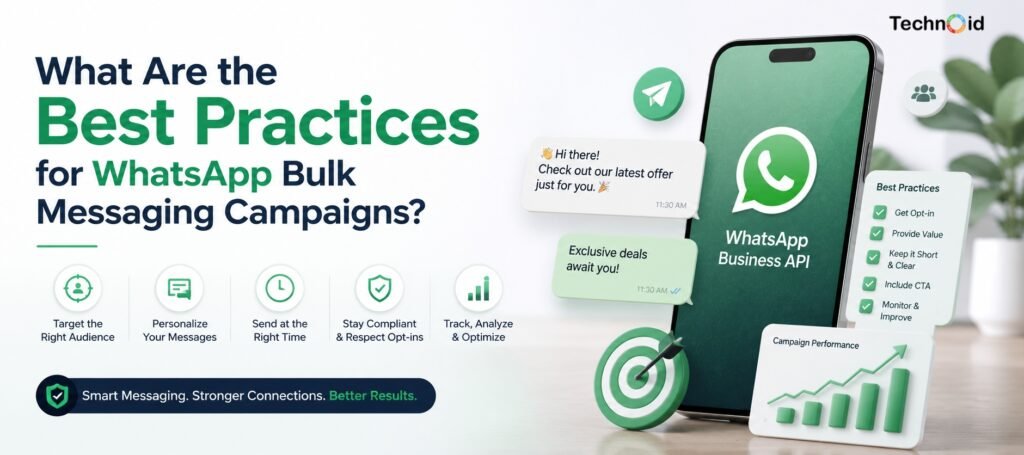
If you’ve ever hit “send” on a bulk WhatsApp campaign and then watched your open rates crash (your number get flagged), you already know that WhatsApp isn’t like email. There’s no spam folder to hide your mistakes; customers see everything, and so does WhatsApp’s own algorithm.
But the good news is WhatsApp bulk messaging is still one of the highest-performing marketing channels out there, with high open rates that email marketers can only dream about. You just need to do it the right way. Here’s how.
1. Start With Permission,Nota Purchased List
WhatsApp requires opt-in consent before you message. Build your list through website sign-up forms, in-store QR codes, checkout pages, or a simple “message us to join” campaign.
A clean, permission-based list will always outperform a bigger, colder one. Fewer blocks, fewer spam reports, better delivery.
2. Segment Your Audience Before You Send
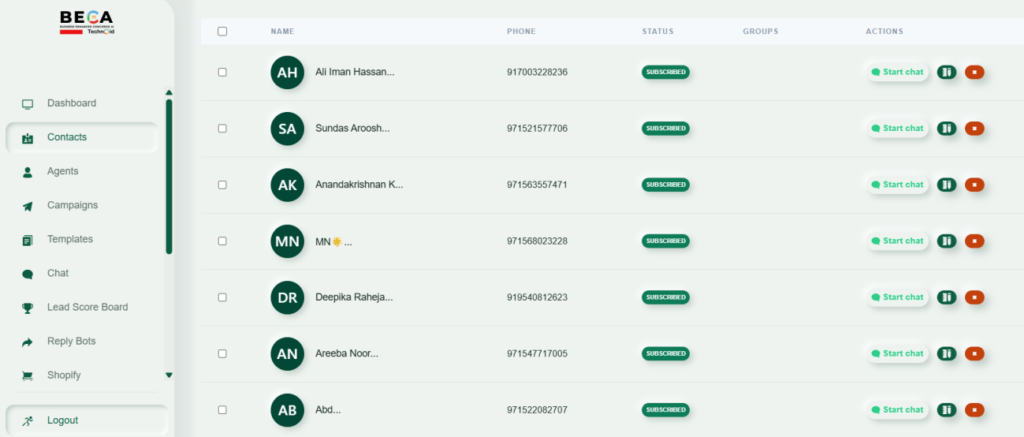
Blasting the same message to your entire contact list is the fastest way to get ignored or blocked. Instead, group your audience by behavior: recent buyers, cart abandoners, loyal customers, or leads who haven’t converted yet.
This is where a platform like BECA created by Technoid earns its keep. Instead of manually sorting spreadsheets, BECA lets you tag and segment contacts automatically based on order history, preferences, or past interactions, so every campaign actually feels relevant to the person receiving it.
3. Personalize Beyond the First Name
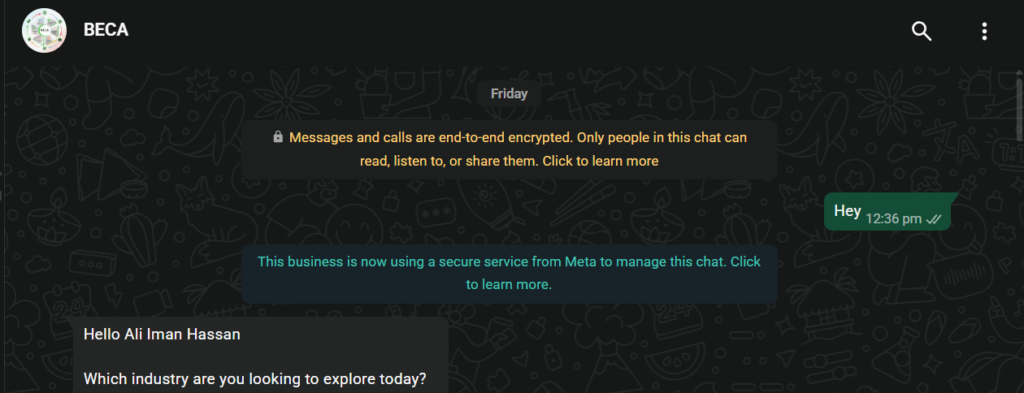
Earlier “Hi [Name]” used to feel personal. Now it feels like a mail-merge. Real personalization means referencing what the customer cares about – their last order, a product they browsed, or an appointment they booked.
With BECA’s personalized messaging tools, you can pull in dynamic details automatically, so a healthcare clinic can send appointment reminders with the actual date and doctor’s name, while an e-commerce store can nudge a shopper about the exact item left in their cart.
4. Time Your Campaigns Thoughtfully
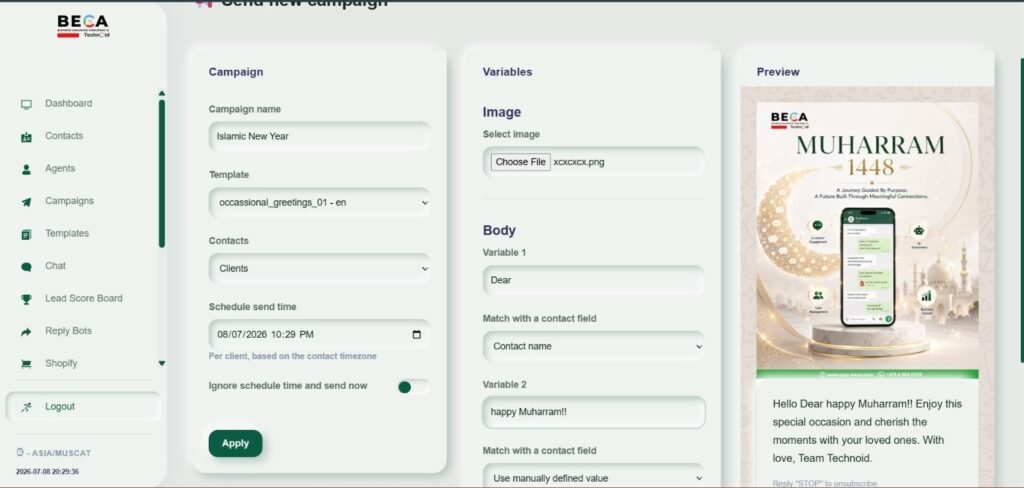
Sending a promotional blast at 6 a.m. is a guaranteed way to annoy people before they’ve had coffee. Look at when your audience is typically active – for most consumer brands, that’s late morning or early evening – and schedule accordingly.
Campaign scheduling tools take the guesswork out of this. Set your message once, choose the best send window, and let automation handle the rest instead of manually triggering sends at odd hours.
5. Keep the Message Short, Clear, and Valuable
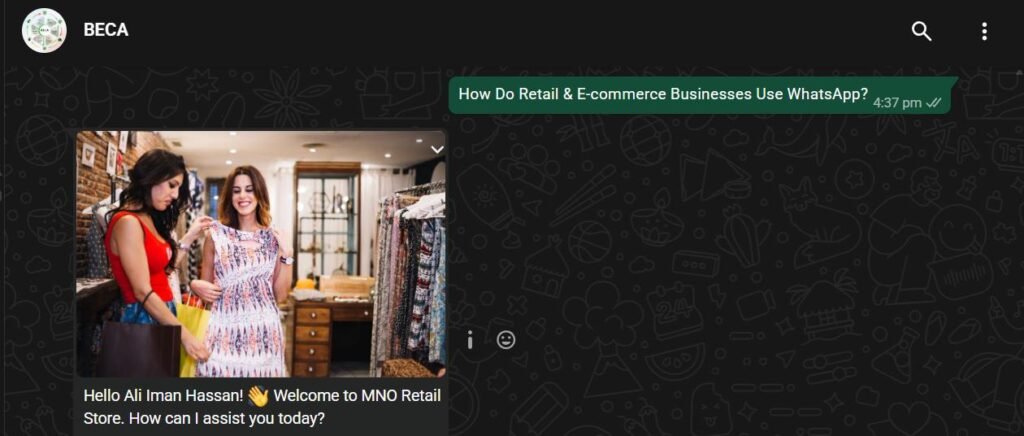
WhatsApp is a conversational channel, not a billboard. Long paragraphs and multiple links feel intrusive. Stick to one clear idea per message: a discount, a reminder, an update. Add a single, obvious call to action “Reply YES to confirm,” “Tap here to claim your discount”, so the next step is never in question.
Rich media helps, too. A short product image, a PDF menu, or a quick voice note can boost engagement far more than plain text alone, as long as it’s used sparingly.
6. Respect Frequency Limits
Just because you can message someone doesn’t mean you should message them daily. Over-messaging is the number one reason people mute or block business accounts. A good rule of thumb: reserve WhatsApp for messages that genuinely need attention such as order updates, appointment reminders, time-sensitive offers etc. rather than routine noise.
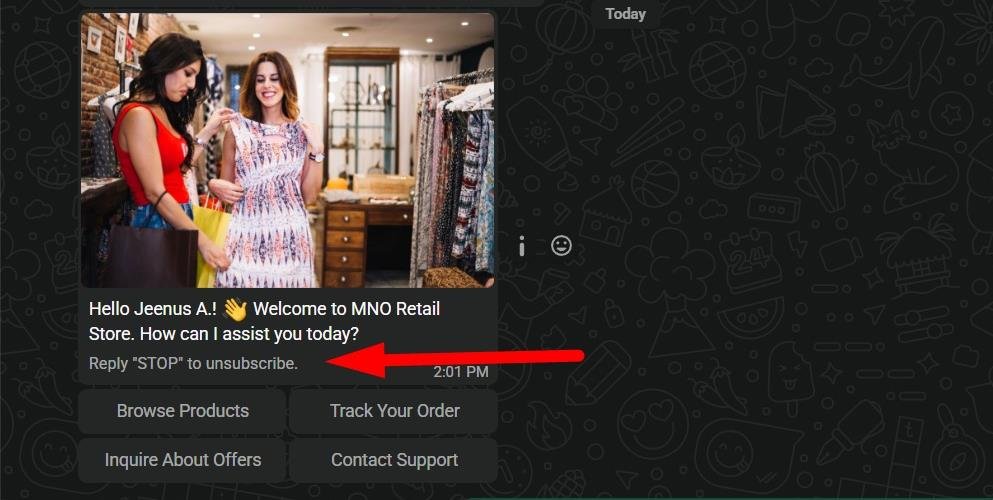
7. Make It Easy to opt Out
Giving people an easy way to unsubscribe actually protects your account’s health. It keeps your engaged list clean, reduces spam complaints, and keeps your delivery rates high for the customers who do want to hear from you.
8. Track, Test, and Adjust
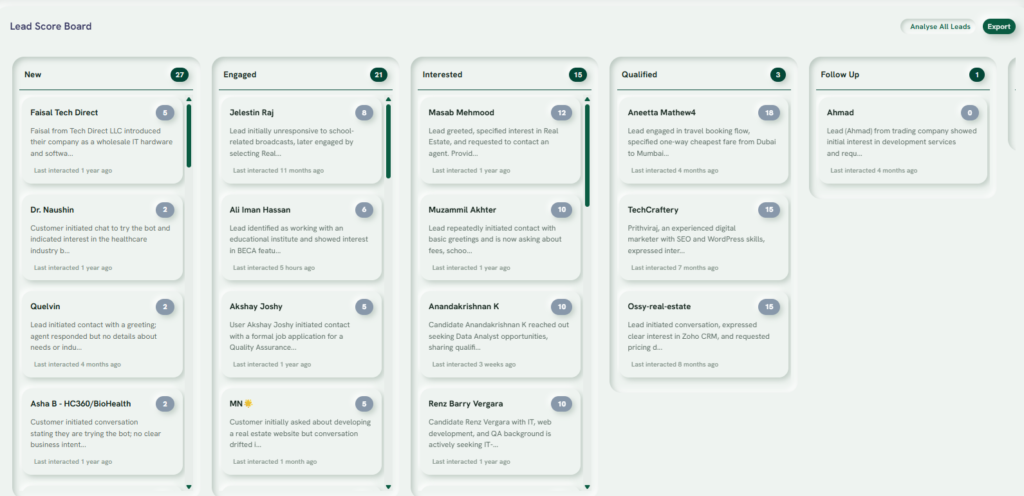
Bulk messaging isn’t “set it and forget it.” Keep an eye on delivery rates, open rates, and response rates for every campaign. If one segment isn’t responding, tweak the message, the timing, or the offer before your next send.
This is where built-in analytics dashboards matter. Instead of guessing what worked, you can see exactly which campaigns drove replies, clicks, or sales and double down on what’s working.
9. Combine Automationwitha Human Touch
Chatbots are great for FAQs, order tracking, and lead capture, but customers still want a human when things get complicated. The best campaigns blend automated first responses with a smooth handoff to a live agent when needed, so no one feels stuck talking to a wall.
Summary
WhatsApp bulk sender tool works best when it feels less like a broadcast and more like a conversation timely, relevant, and easy to respond to. Segmentation, personalization, smart scheduling, and clean analytics aren’t just nice extras; they’re what separates a campaign that gets ignored from one that gets replies.
If you’re managing all this manually, it adds fast. That’s exactly the gap BECA was built to close – giving businesses one place to schedule, personalize, automate, and measure their WhatsApp campaigns without losing the human feel that makes WhatsApp marketing work in the first place.
Ready to see it in action? Book a quick demo and find out how much easier bulk messaging can be when it’s actually built for WhatsApp.