

WhatsApp Marketing vs Email Marketing: Which Delivers Better ROI?
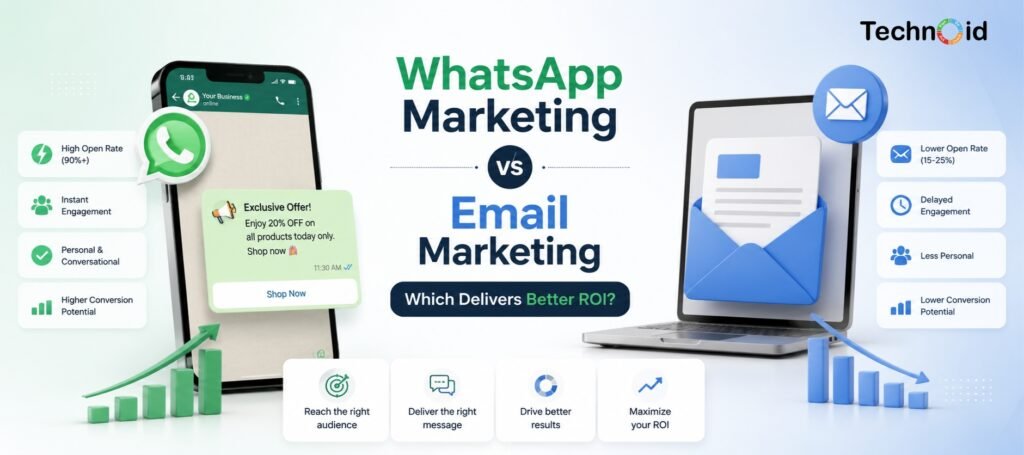
Every marketing team eventually has this debate: should the budget go toward email, or is it time to shift into WhatsApp? Both channels have their fans, both show up in every “top marketing channels” report, and both can absolutely drive revenue. But when you actually sit down and compare the numbers, one of them tends to pull ahead, and it depends on what you’re optimizing for.
Let’s break down how they really stack up.
Open Rates: Not Even Close
Email open rates hover around 15–25% for most industries, and that’s on a good day. Spam filters, promotions tabs, and inbox overload mean a huge chunk of your carefully written emails never get seen at all.
WhatsApp messages, on the other hand, routinely see open rates above 90%, often within minutes of being sent. People check WhatsApp the way they check texts – quickly, and almost always. This high visibility makes WhatsApp one of the most effective communication channels for businesses.
However, these results aren’t automatic. WhatsApp prioritizes user experience over message volume. Meta reviews message templates, monitors customer engagement signals, and considers a business’s messaging quality and reputation when determining message delivery. Businesses that send relevant, consent-based messages are more likely to achieve strong delivery rates and engagement, while repetitive or unwanted promotional messages may be restricted. This focus on quality helps maintain user trust and is one of the key reasons WhatsApp continues to deliver exceptional engagement.
Response Time and Engagement
Email is a “read it later” channel. People batch their inbox, skim subject lines, and often reply to days later.
WhatsApp is built for real-time back-and-forth. A customer can ask a question, get an answer, and complete a purchase in the same conversation, all within a few minutes. That immediacy is a huge advantage for time-sensitive offers, abandoned cart recovery, or appointment confirmations where every hour of delay costs you a conversion.
Cost Per Message vs Cost Per Conversion
Email is cheap to send, often close to free per message once you have a platform. WhatsApp Business API messages typically carry a small per-conversation cost, so on paper, email looks more budget-friendly.
But ROI isn’t cost per send; it’s cost per outcome. If a WhatsApp campaign converts at 3–5x the rate of an equivalent email campaign, the higher per-message cost is easily offset by the extra revenue generated. This is exactly where a lot of teams get the comparison wrong: they compare send cost instead of comparing profit.
Personalization Depth
Email personalization usually stops at a first name and maybe a product recommendation block. WhatsApp allows for something closer to an actual conversation referencing a specific order, sending a quick voice note, sharing a PDF catalog, or letting a chatbot walk someone through choosing a product.
This is where a platform like BECA makes a real difference. Its personalized messaging and chatbot integration let businesses tailor each WhatsApp conversation using real customer data, order history, preferences, past interactions, so messages feel like a helpful nudge from a real person rather than a mass blast.
List Health and Deliverability
Email lists degrade fast. Bounce rates climb, spam complaints pile up, and sender reputation can tank a whole domain if you’re not careful. Keeping a healthy email list is a full-time job in itself.
WhatsApp, by nature of requiring opt-in consent, tends to have cleaner, more engaged lists. Combined with segmentation and campaign scheduling tools, businesses can send fewer, more relevant messages which keep engagement high and blocks low.
Where Email Still Wins
To be fair, email isn’t obsolete. It’s still better for:
- Long-form content like newsletters, reports, or detailed product updates
- B2B outreach where formal documentation matters
- Storing a searchable history of communication
- Reaching audiences who may not be active on WhatsApp
If your business relies on nurturing leads over a long, research-heavy sales cycle, email still has a place in the funnel.
The ROI Verdict
For transactional, time-sensitive, and customer-service-driven communication – cart recovery, appointment reminders, order updates, flash sales. WhatsApp marketing consistently delivers better ROI thanks to higher open rates, faster responses, and stronger conversion rates.
For long-form nurturing, detailed content, or reaching contacts who aren’t on WhatsApp, email still earns its spot in the marketing mix.
The smartest strategy for most businesses isn’t picking one over the other; it’s using each channel for what it does best. Email is for depth and documentation. WhatsApp is for speed, personalization, and conversions.
Making the Shift Without the Guesswork
The biggest hurdle for most teams using WhatsApp marketing in UAE isn’t deciding to get started—it’s managing it effectively. Sending bulk messages manually, tracking who responded, and personalizing every conversation quickly turns into a mess of spreadsheets and missed follow-ups.
That’s exactly the gap BECA fills. With built-in campaign scheduling, audience segmentation, personalized messaging, and real-time analytics, BECA gives businesses everything they need to run WhatsApp campaigns that convert without losing the human touch that makes the channel work.
If you’re weighing WhatsApp against email, the real answer might be stop weighing, start testing. Book a quick demo with BECA, see how a well-run WhatsApp campaign compares to your current email numbers.